

Implementation of Whole-of-Government (WoG) Enterprise Architecture
The digitalization of the public sector in Malaysia has undergone a long and continuous transformation journey, making the country a leader in the digital delivery of government services. Beginning more than three decades ago, this effort is based on technological innovation and a people-centric approach to improve the efficiency, transparency, and accessibility of public services.
Starting in 1995 with the Multimedia Highway Corridor (MSC) initiative, the government took the first steps towards digitalisation through the transformation of administrative processes and service delivery using ICT and multimedia. In 2000, the National IT Agenda (NITA) was introduced to harness ICT technology in driving national development while bridging the digital divide among the people. This was followed in 2007 by the eGov 1.0 – Connected Government phase, encouraging the use of technology in everyday life.
In 2015, the government introduced eGov 2.0 – Collaborative Government, a “Whole of Government” approach that aims to improve integration and productivity between government agencies in a more integrated manner. Then, in 2020, the eGov 3.0 – Digital Government phase marked the transition to people-centric services, guided by strategic documents such as the Malaysia Digital Economy Blueprint (2021-2025). By 2025, the government will focus on GovTech with the Digital First Strategy Shift (2024-2025) as the main driver, using technology to drive the growth of the digital economy. This initiative also introduced the concept of MADANI Economy as the foundation for sustainable digital economic development.
This evolution reflects the government’s continued efforts to improve efficiency, inclusiveness, and service delivery to the people. This evolution not only strengthens the role of technology in public administration but also ensures that Malaysia remains a leader in the regional digital economy.

Whole-of-Government Enterprise Architecture Approach to Public Sector
Enterprise Architecture (EA) enables an organization to identify and streamline the services it provides by understanding the overall organizational structure. This includes the functions performed, the services offered, the work processes involved, the data used, and the applications and technologies that support those services.
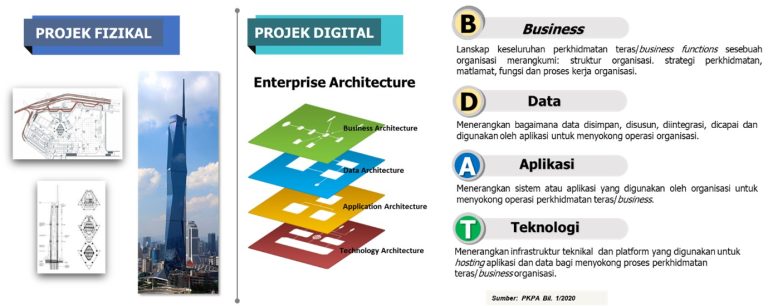
In other words, EA provides a framework that underpins the development of public sector digital/information and communication technology (ICT) initiatives, much like an architect’s blueprint is used in the development of a physical project to show the design, structure, and technology requirements. EA enables organizations to gain a clear and detailed picture of their operations. This deep understanding is essential to identify areas for improvement, eliminate duplication, and ensure that resources are used optimally. Ultimately, EA helps organizations deliver more efficient, effective, and responsive services to their customers or stakeholders.
The Whole-of-Government (WoG) approach to the delivery of government digital services is structured and coordinated across six key sectors. The Sector Coordination Meeting, chaired by the Director General of the National Digital Department (JDN), plays a key role by bringing together Digital Teams from various key sectors. The WoG ecosystem relies on application integration, a preference for generic government applications, shared data, and supported by the use of standard technologies. This strategy promotes efficiency and reduces duplication in the delivery of efficient and integrated services to the public.
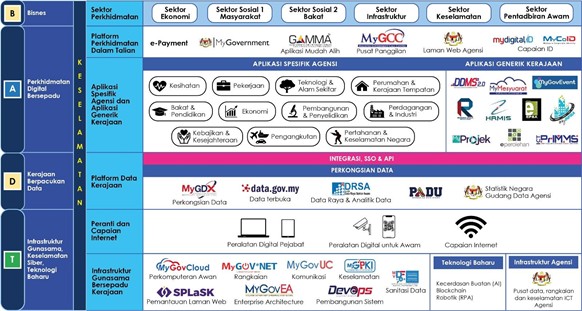
The Whole-of-Government (WoG) concept and Enterprise Architecture (EA) are two interrelated elements in the evolution of public sector digitalization. The WoG approach promotes collaboration and integration between government agencies to deliver services in a more holistic and citizen-centric manner. To achieve this goal, EA provides a comprehensive framework that guides the planning, design, and implementation of digital initiatives. By using EA, government agencies can ensure that their systems and applications are interoperable, data can be easily shared, and ICT resources are optimally utilized, thereby supporting the effective implementation of the WoG strategy.
GovTech: Whole-of-Government (WoG) Framework
The delivery of government services is shifting towards GovTech by focusing on a whole-of-government (WoG) approach by optimally utilizing data and digital technology in the government system to be more efficient, intelligent, agile and secure towards the well-being of the people and the prosperity of the country by emphasizing aspects of digital security and increasing people’s confidence in government transactions.
The GovTech concept refers to the WoG approach that aims to implement the digitalization of the public sector in a systematic, efficient, and integrated manner. This approach emphasizes the integration of digital technology across the entire government administration operations to improve the quality of service delivery, bridge the gap between government agencies, and meet the needs of the people and stakeholders. GovTech serves as a catalyst for a more responsive and innovative government transformation through technological synergy and cross-agency collaboration.
This approach focuses on three main aspects. First, accessible and people-centric public services, where digital technology is used to provide more user-friendly, fast, and inclusive services. Through a centralized and integrated digital platform, citizens can access various government services without having to go through complicated bureaucratic processes or physical barriers. This approach ensures that citizens have a seamless service experience that meets their current needs.
Second, GovTech drives the transformation of digital government by focusing on modernizing existing systems and moving from manual processes to fully automated ones. This involves developing technology infrastructure such as cloud computing, data centralization, and the use of smart technologies such as data analytics and artificial intelligence (AI). System integration across government agencies ensures that data can be shared securely and efficiently, thus accelerating decision-making and improving the effectiveness of government operations. This transformation also ensures that the government is resilient in facing new challenges and is able to adapt to technological changes.
Third, the concept also emphasizes the development of a simple, efficient, and transparent government system. This approach minimizes bureaucracy, reduces duplication of work between agencies, and improves operational efficiency through real-time data monitoring and analytics. Transparency in service delivery is strengthened through open access to information, ensuring that citizens and stakeholders have confidence in the integrity and accountability of the government system. These features help build a more efficient ecosystem with strict monitoring of service performance.
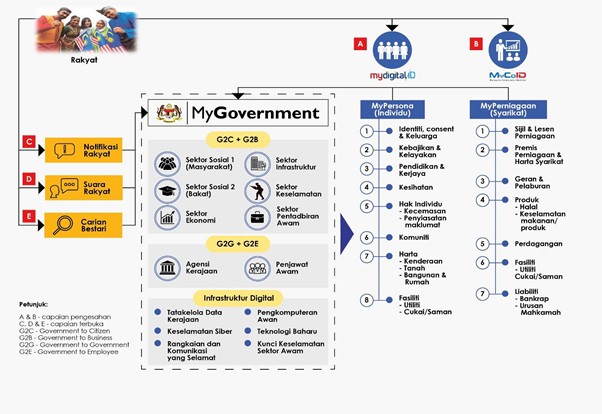
On 8 May 2019, the Cabinet Meeting agreed that the Ministry of Communications and Multimedia Malaysia (KKMM), through the Malaysian Communications and Multimedia Commission (MCMC), should conduct a detailed study on the National Digital Identity (IDN) Framework.
National Digital Identity (IDN) is a method of authenticating a person’s identity in cyberspace based on the ‘What You Are’, ‘What You Have’, and ‘What You Know’ approach. This approach is supported by a trusted digital identity framework, ensuring that digital identities can be managed securely and effectively. IDN is a form of digital identification that allows individuals to gain access to digital services and conduct online transactions with a higher level of security.
MyCoID is a company number issued by the Companies Commission of Malaysia (SSM) and is used to deal with all related agencies. MyCoID aims to simplify the process of managing business documents digitally. Mandatory company name searches and formations can now be done entirely online through the MyCoID portal which has been operational nationwide since 11 December 2014. This system is designed to improve the convenience and effectiveness of business information management in Malaysia, in line with the government’s efforts to drive digital transformation in the economic sector.
Through IDN and MyCoID, the government is working to ensure that individuals and businesses can enjoy the full benefits of digital transformation, in line with Malaysia’s aspirations to become a regional digital economy leader.
MyPesona and MyPerniagaan were introduced as concepts representing individuals and businesses. MyPesona represents individuals, with registry data covering identity information, data management permissions, and family structure. It also includes data related to social welfare, assistance eligibility, education, career, and health. In addition, MyPesona contains information on individual rights, community involvement, property such as vehicles, land, and houses, as well as facilities such as utility bills, tax payments, and summons.
Meanwhile, MyPerniagaan represents companies, with registry data involving business certificates and licenses, business premises information, and company assets. It also includes data related to grants, investment opportunities, product management such as halal and food safety certificates, as well as utility facilities, taxes, and company summons. In addition, MyPerniagaan also focuses on business liability management, including bankruptcy and court matters.
The WoG framework also prioritizes inclusivity and transparency through open access features such as People’s Notifications that provide timely updates, People’s Voices to ensure that the people’s voices are heard, and Smart Search that offers smart search functionality. The platform supports various sectors including economy, infrastructure, social services, security, and public administration, while streamlining G2C (Government to Citizens), G2B (Government to Business), G2G (Government to Government), and G2E (Government to Employees) interactions.
Overall, the GovTech concept in the Whole-of-Government (WoG) approach is the government’s strategic effort to digitize the public sector to support the development of the country’s digital economy. This approach not only increases access to quality services, but also ensures that service delivery is carried out efficiently, easily, and transparently. GovTech is a key driver of Malaysia’s digital transformation agenda, ensuring that every individual, community, and organization can enjoy the benefits of this digitization. Through this step, the government not only strengthens the effectiveness of the administrative system, but also supports the goal of becoming a leader in the regional digital economy.
Digitization Sketch
The digitalization sketch depicts the entire government’s digital services in WoG which explains how government services are provided comprehensively and a digital solution is seamlessly interconnected across agencies. The perspective of government service clusters is depicted through five sectors, namely the social sector, the economic sector, the security sector, the infrastructure sector and the public administration sector which is based on the services provided directly related to the sector’s activities to four target groups, namely the people, the business community, government agencies and civil servants.
Social Sector
The Digital Technology Access in Learning Initiative aims to provide high-quality education powered by digital technology. Through this approach, the government ensures that students and teachers across the country can enjoy the benefits of technological advances, thereby improving the effectiveness of the learning and teaching process.
In support of this initiative, the MyGDX platform has been enhanced with security features that include data and cyber security aspects. These improvements ensure that every agency and registered user is authenticated through the MyGDX Portal, which is integrated with various related agencies. In addition, every API subscription approval is also authenticated through a digital certificate, and every system accessing the MyGDX API will be verified first through Public Key Infrastructure (MyGPKI) technology.
This approach not only increases access to high-quality education but also ensures the security of user data. This move reflects the government’s commitment to harnessing digital technology to empower the social sector, particularly in education, to ensure that the next generation is prepared to face the challenges of the digital world.
Economic Sector
In an effort to stimulate the country’s economic growth, the Malaysian government has implemented various digitalization initiatives to support business activities, particularly in the management of grants, licenses and business financing. These initiatives aim to speed up and simplify the affairs of entrepreneurs, improve the efficiency of public services and promote innovation and competitiveness among local enterprises.
The Business Grant Management Initiative focuses on digitizing the application, assessment and distribution process of business grants. Through an efficient digital system, entrepreneurs can apply for grants more easily and transparently without having to deal physically. Digitizing the application process and issuance of business licenses ensures compliance with regulations that are easier to monitor and reduces bureaucracy. Digitization in business financing management allows applicants to access financing information, submit applications and check approval status more efficiently.
All these efforts involve the ASDF Shift initiative, which focuses on analytics and data sharing through platforms such as MyGDX, Open Data, and paperless digital records management through the DDMS 2.0 system. In addition, ministries and agencies leverage the government’s network, data centers, and cloud computing provided by JDN, including MyGov*Net, MyGovCloud@PDSA, and MyGovUC, which ensures security and effectiveness in data management.
This initiative is part of the government’s efforts to empower the agricultural sector with the latest technology, ensuring that this important economic sector continues to contribute to the country’s economic growth while maintaining environmental sustainability.
Security Sector
The smart digital technology initiative in the national security sector aims to improve the efficiency of security services, ensure national sovereignty, security, peace and harmony through the use of sophisticated digital technology. This move is designed to strengthen the country’s preparedness in facing increasingly complex modern security challenges.
All efforts carried out by the Ministry of Home Affairs (KDN) and its agencies involve the implementation of the ASDF Shift initiative, which focuses on data analytics and information sharing through platforms such as MyGDX, Open Data, and Big Data Analytics. In addition, this system also supports paperless digital records management through DDMS 2.0, which helps increase efficiency and reduce reliance on manual processes.
To ensure data and communication security, the Ministry of Home Affairs and its agencies also use secure networks, data centres, and cloud computing provided by the National Digital Department (JDN), including MyGov*Net, MyGovCloud@PDSA, and MyGovUC. With these measures, the national security sector has become more resilient, responsive, and able to address various security challenges in the digital era.
This approach reflects the government’s commitment to empowering national sovereignty with the latest technology, in line with the vision to ensure that the security of the people and the stability of the country remain the top priority.
Infrastructure Sector
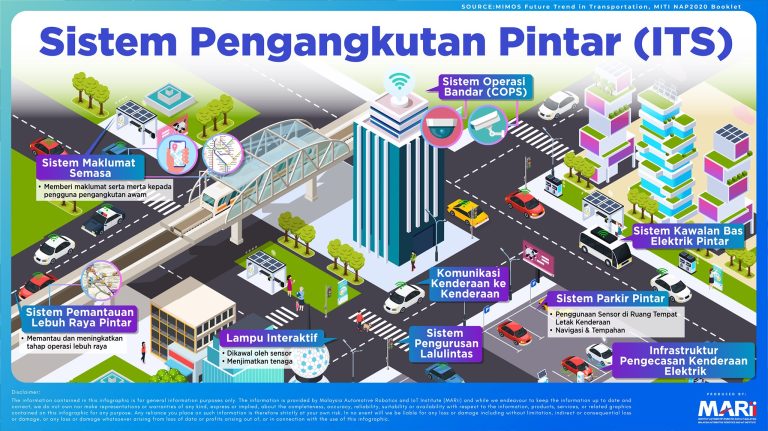
The Intelligent Transport System aims to improve the efficiency, safety, and sustainability of the transport system through the application of advanced digital technology. This initiative plays a significant role in improving the quality of public transport services and related infrastructure, making them safer, more efficient, and more environmentally friendly.
All efforts under the Ministry of Transport (MOT) and its agencies involve the implementation of ASDF’s Shift initiative for analytics and data sharing through platforms such as MyGDX and Open Data, as well as paperless digital records management through DDMS 2.0. In addition, MOT leverages the network, data centers, and secure cloud computing services provided by JDN, including MyGov*Net, MyGovCloud@PDSA, and MyGovCloud@CFA.
This approach ensures that public transport and infrastructure in Malaysia not only meets current needs but is also adapted to support sustainable development and future growth. This is part of Malaysia’s concerted efforts to achieve technology-driven developed nation status.
Public Administration Sector
Initiatives in the public administration sector aim to strengthen efficiency, integrity, and transparency in the government administration system through the use of work process automation. This transformation is designed to improve operational efficiency, quality of service delivery, integrity in management, and overall productivity of the public administration sector.
All these efforts are driven by the Prime Minister’s Department (JPM) and related agencies, with the implementation of the ASDF Shift initiative, which focuses on data analytics, information sharing through Open Data, Big Data Analytics, the use of video conferencing, and paperless digital record management using the DDMS 2.0 system. In addition, government agencies also leverage the communication network, data center, and cloud computing provided by the National Digital Department (JDN). Infrastructure such as MyGPKI, MyGov*Net, MyGovUC, and MyGovCloud@PDSA are used to ensure security and efficiency in government data management and communication.
Through this approach, the public administration sector is not only able to provide faster and higher quality services to the people, but also strengthen integrity and transparency in the government management system. This transformation is in line with the government’s vision to become a modern and efficient administration model in the digital era.
New Approach to Digital/ICT Initiatives/Projects Needed
The Malaysian government is committed to strengthening the implementation of digital and ICT projects through a strategic approach that focuses on prioritizing high-impact projects, cost optimization, and efficient service design. This move aims to ensure that each project implemented provides maximum benefits to the people, industry, and government agencies, while supporting the country’s vision as a leader in the digital economy.
High Impact Project Priorities
The government focuses primarily on projects that have a major impact on the country and society, especially those involving high risk.
I. High risk and potentially life-threatening
The first priority is projects that are high-risk and have the potential to have implications for the safety of life. This includes initiatives that involve the safety of the people such as critical infrastructure, emergency systems, and health services. These projects are prioritized to ensure the well-being and protection of the lives of the people are maintained.
ii. Affecting and harming public health
The second priority is projects involving public health. The government is emphasizing efforts to address health issues that may threaten the well-being of communities. These include projects related to digital health systems, disease control, and the development of better and more efficient health infrastructure.
iii. Potentially threatening national security
Next, the third priority involves projects involving national security. This includes security measures such as the protection of government data, border security surveillance, and the use of smart digital technology to ensure that the country’s sovereignty and stability remain protected from any threats.
iv. Potentially affecting the country’s economy and finances
The fourth priority focuses on projects related to issues that have the potential to affect the country’s economy and finances. This initiative aims to ensure the stability of the country’s economy through the development of digital systems that support the business, finance, and trade sectors. This focus is important to ensure sustainable economic resilience and competitiveness at the global level.
v. Has high complexity and crosses agencies and has a direct impact on civil servants and the people
The fifth priority is projects that are highly complex and involve collaboration across government agencies. Such projects have a major impact on civil servants and citizens, requiring comprehensive system and service integration. This approach ensures that government services can be delivered more efficiently and responsively to the needs of the people.
vi. The core application (mission critical) of the agency
Finally, the sixth priority is the core (mission critical) applications used by government agencies. This project involves key systems that are critical to the daily operations of the agencies, such as data management, digital records, and IT infrastructure that supports government administration. This priority ensures that the continuity and smoothness of government services to the people can be maintained in any situation.
Project Cost Optimization with Government Digital Shared Services
The Malaysian government’s approach to optimising project costs emphasises the use of digital shared services based on interoperability technology as a holistic and integrated solution. This technology ensures that digital systems across various government agencies can function seamlessly, share data, and communicate with each other without technical barriers. With interoperability technology, system duplication can be avoided and the cost of developing new systems can be reduced, thereby maximising the use of existing resources.
I. ICT Shared Services
This shared service involves several main components. Among them are the Data Center, Network, Communication, and Security which allows the government administration system to operate more stably and securely. This is supported by the use of Cloud Services which include Public Cloud, Private Cloud, Hybrid Cloud, as well as IaaS (Infrastructure as a Service), PaaS (Platform as a Service), and SaaS (Software as a Service) service models. Through this cloud service, data storage and information processing can be done in a scalable, flexible, and cost-effective manner.
ii. ICT Consulting Services
In addition, ICT Consulting Services play a key role in ensuring the successful implementation of the government’s digital transformation through technical support and in-house expertise. The main focus of this service is to provide guidance and advisory services to government agencies regarding the planning, development, and maintenance of ICT systems. With in-house ICT expertise, agencies can optimize the use of digital technology while ensuring that system development and operation costs can be well controlled.
IV&V or Independent Verification & Validation is also a critical element in this service. IV&V aims to ensure that every ICT project implemented by government agencies meets the set quality, security, and performance standards. This process involves independent assessment of the design, development, and testing of systems to ensure that the system operates efficiently, securely, and interoperably between agencies.
Technologies such as blockchain are also being introduced as part of the innovation in ICT Consulting Services, providing a transparent and secure network for data sharing across government agencies. With the support of organisations such as SDEC, this expertise ensures that government services are more responsive to changing technology and user needs.
iii. Application Rationalization
Next is application rationalization which is an important step in streamlining and optimizing the use of application systems across government agencies. This approach emphasizes common applications and mobile applications, where similar or overlapping systems are consolidated to reduce costs, increase efficiency, and maximize the benefits of digital technology.
Common applications refer to the development of a system or application that can be shared and used jointly by various government agencies. For example, DDMS 2.0 (Document Digital Management System) provides a digital document management platform and ePayment supports faster and more secure electronic financial transactions. This reduces dependency on separate systems, thus promoting integration across government agencies. In addition, the use of the MyCoID and mydigital ID platforms enables efficient management of business and individual identities, in line with the government’s digital aspirations.
In the context of mobile applications, emphasis is placed on developing flexible and user-friendly applications, enabling citizens to access government services anytime and anywhere. Initiatives such as HRMIS (Human Resource Management Information System) and platforms such as PADU demonstrate the government’s efforts in ensuring that mobile systems can support daily operations and provide faster and more effective services.
Through application rationalization, the government can ensure smarter and more planned use of technology resources. This measure not only supports the objectives of digital transformation, but also increases interoperability between government systems and facilitates more efficient delivery of digital services to the people and the business sector.
iv. Digital Platforms & Services
Digital platforms and services play a key role in supporting the government’s digital transformation agenda by providing comprehensive and integrated technology solutions. This includes the development of digital portals and platforms such as MyGovernment Portal, End-to-End (E2E), and MyGDX which aim to facilitate access to government services and improve the effectiveness of the public administration system.
MyGovernment Portal serves as the main gateway to all government services in one centralized platform. It enables citizens, businesses, and government agencies to access various services online easily, efficiently, and securely. This approach ensures more user-friendly service delivery and reduces reliance on manual processes.
In addition, the End-to-End (E2E) system emphasizes the efficiency of digital work processes from start to finish, ensuring that every government transaction can be carried out automatically and smoothly without bureaucratic obstacles. Through this platform, services can be delivered more quickly and transparently, thus increasing public sector productivity.
In terms of data management, MyGDX or Government Data Exchange enables integrated data sharing between government agencies. This promotes interoperability between systems and maximizes data usage to support more accurate planning and decision-making.
Advanced technologies such as Data Analytics and Artificial Intelligence (AI) are also applied in this platform to help the government analyze big data and predict future needs. This analysis is used to identify trends, improve services, and plan more proactive strategies that focus on the needs of the people.
v. Management of ICT Equipment & Software Usage
The management of ICT equipment and software usage is an important component in ensuring the smooth operation of the government’s digital system. This aspect includes the handling of software licenses as well as front-end hardware such as computers, networks, and other equipment used by government agencies. With systematic management, the government can ensure more efficient use of ICT resources, minimize the risk of equipment incompatibility, and maximize productivity.
Software license management involves controlling copyright compliance, valid licensing, and periodic renewals. This ensures that the software used is always up-to-date and in line with current technological requirements. In addition, front-end hardware management ensures that the equipment used by end users is functioning properly and can support existing applications and systems.
Overall, ICT equipment and software management helps the government maintain consistent quality of digital services, optimize operating costs, and ensure that the systems used are always in the best condition. This measure also contributes to the overall efficiency of government administration in achieving the goal of public sector digitalization.
Service Design Requirements and Cost Estimates by JDN
Referring to the Service Design requirements and cost estimates by JDN, this approach emphasizes the importance of technical planning in ensuring efficient and integrated government service delivery. Service Design helps identify the technical and functional requirements for each government project in the early planning phase. This approach ensures that each designed element meets the objectives for the delivery of user-friendly, responsive, and effective digital services.
In the context of interoperability technology, service design plays an important role in ensuring that government systems developed can operate smoothly and are interconnected with each other. This technological interoperability allows data to be shared and integrated across government agencies, avoiding system fragmentation and reducing service duplication. Standardization as referenced through the standard.digital.gov.my platform forms the basis for technical compliance that enables digital systems to function together in an integrated ecosystem.
In addition, this process also includes mapping price catalogs which assists in cost planning and optimizing resources in the development of digital services. By leveraging interoperability technology, government service design can support digital transformation more efficiently, ensuring that each system developed can be seamlessly integrated and shared between agencies, thus contributing to better service delivery to the people and stakeholders.
Sector Digital Team
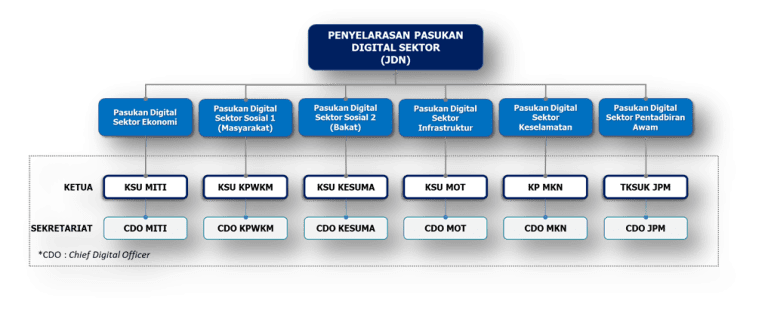
The objective of the Sector Digital Team was established to strengthen digitalization initiatives based on the Whole of Government (WoG) concept through the Government Technology (GovTech) approach adapted from the World Bank’s GovTech.
The authority for the establishment of the team was through the Government Cluster Modernization and MyDigital Committee Meeting Number 1 of 2024 on 27 November 2024, chaired by YBhg. Tan Sri Chief Secretary to the Government.
The medium for implementation, monitoring and discussion of emerging matters is through the Government Digital Initiative Sector Coordination Meeting. The governance and membership of the Sector Digital Team is as shown in the diagram below.
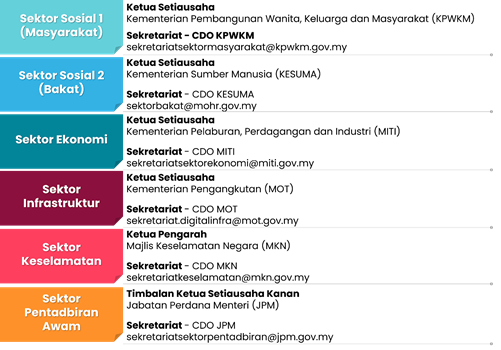
The Sector Heads were appointed through the Sector Head Determination Meeting for the Government Digital Initiative on 6 January 2025, chaired by YBhg. Tan Sri Director General of Public Services. The full list of Sector Heads is as follows.
The Terms of Reference set out are to carry out the functions and roles of the Sector Digital Team as follows:
Digitalization of Services based on service clusters according to sectors as follows:
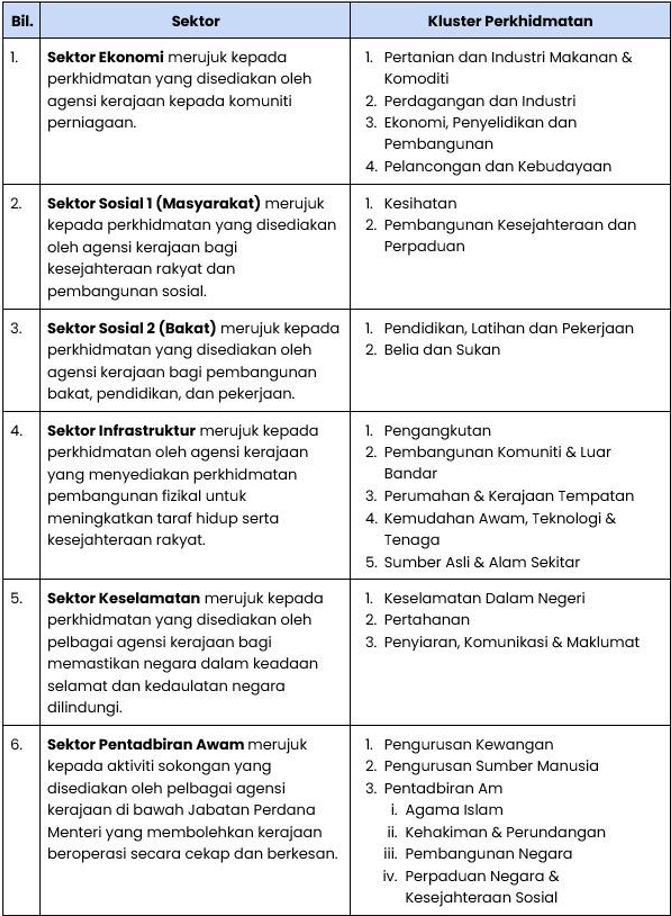
Sector Determination
To submit a Public Sector Digitization Initiative Proposal Paper for ICT projects, ministries/agencies can refer to the agency’s service functions by sector based on the following description:
Sector Determination
To submit a Public Sector Digitization Initiative Proposal Paper for ICT projects, ministries/agencies can refer to the agency’s service functions by sector based on the following description:
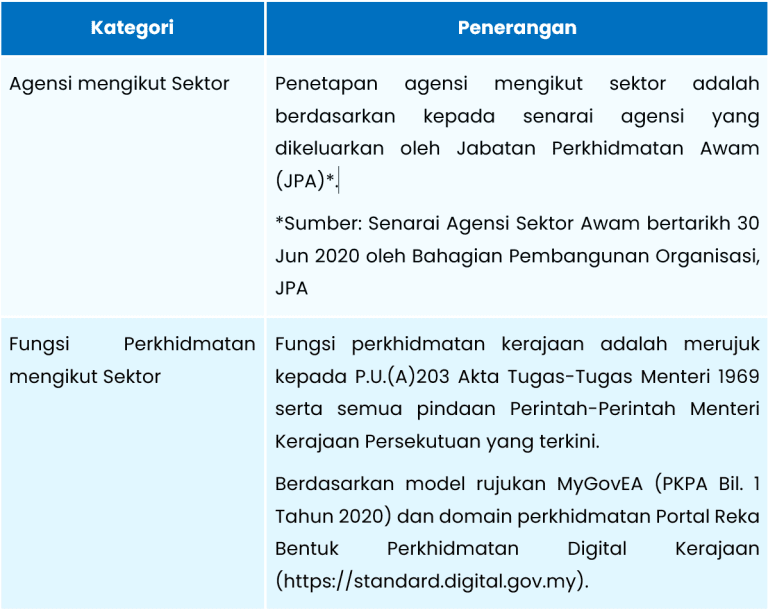
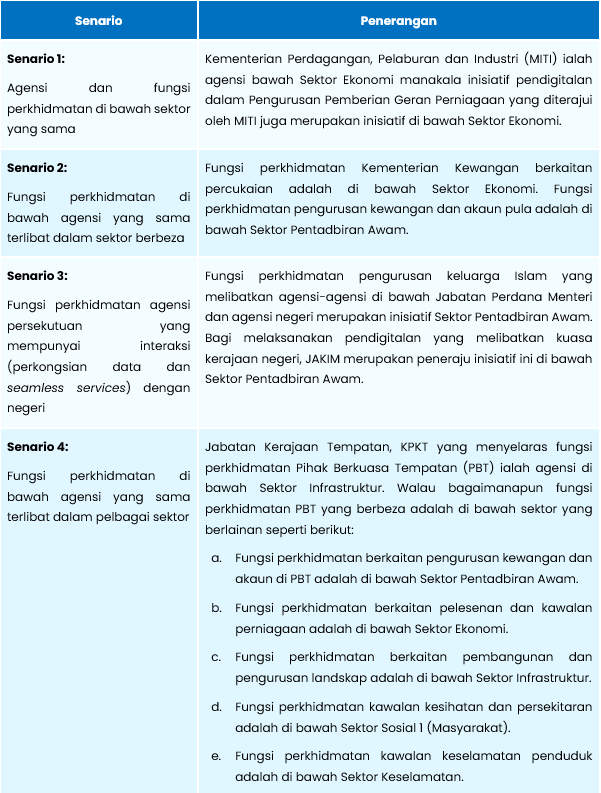
Service Domain Setting
Determination of service domains based on operations and services provided by the organization to recipients or target groups. The main services of ministries/agencies can be grouped into several common domains covering services provided by central agencies, federal agencies, states and local governments. The selection of service domains can be guided by the Service Categories (Business Categories) in Public Services, as contained in the Business Reference Model (BRM MyGovEA) guidelines. This approach encourages agencies/ministries to collaborate as a unit based on the same service domain in line with the Malaysian Digital Government initiatives and strategies. In addition, this approach can also enhance new ways of operating services offered by the government.
Target Group Determination
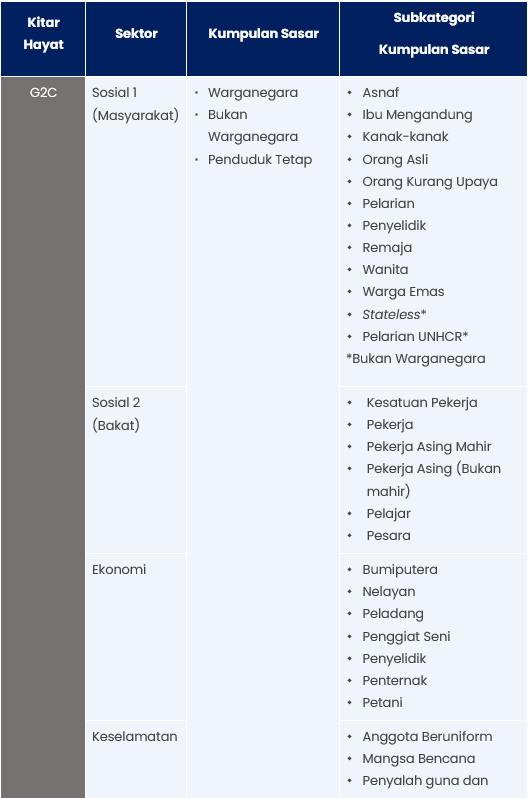
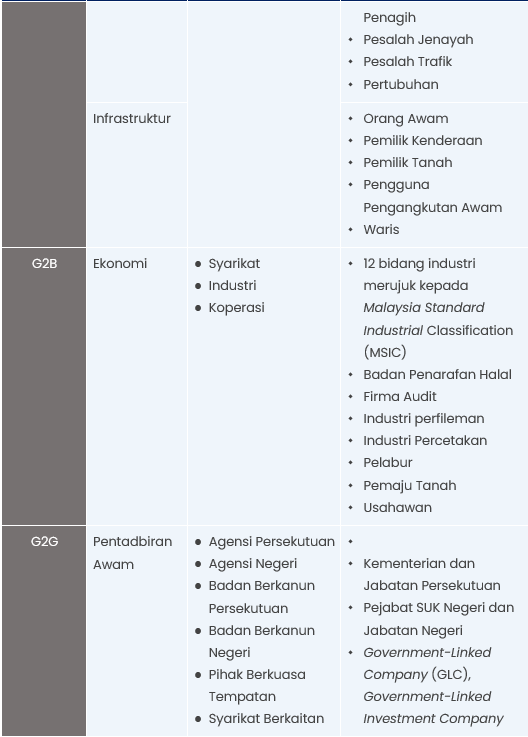
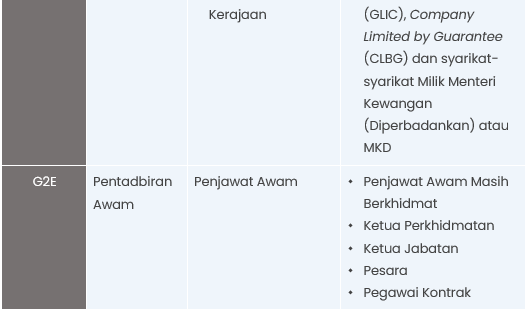
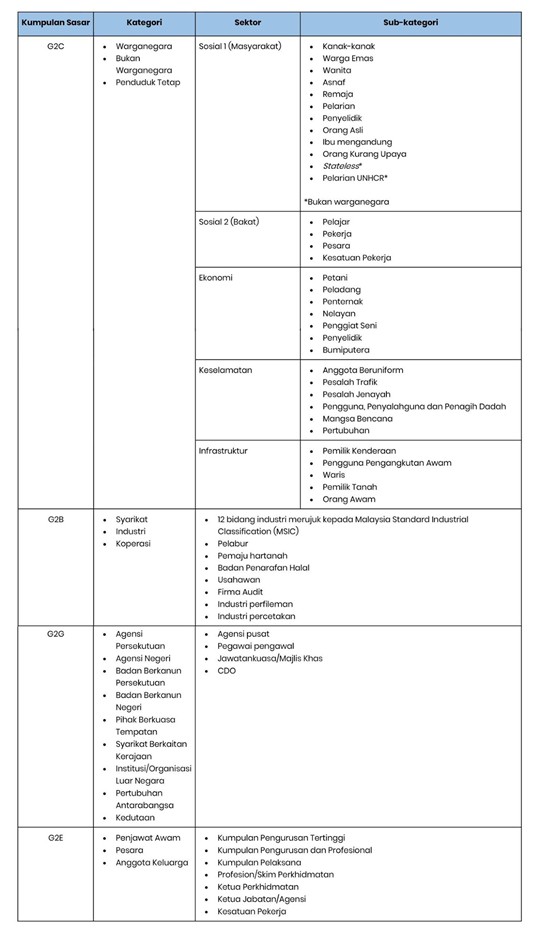
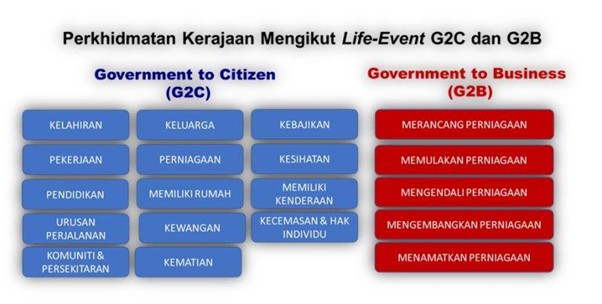
Services are mapped to four target groups, namely services to the people ( Government to Citizen , G2C), to the business community ( Government to Business , G2B), between government agencies ( Government to Government, G2G) and to civil servants ( Government to Employee, G2E).
Service Lifecycle Determination
The life cycle of government services from the beginning to the end of the life cycle is designed by identifying events that are touch points for the people. The life cycle of services is based on four main categories of target groups, namely focusing on the people, the business community, government agencies, and civil servants. An overview of the life cycle determination according to target groups is as shown in the diagram below.
Digital Services Ecosystem
The WoG approach is important to ensure that digitalization is not done in silos , but is coordinated to enable data sharing and integrated service delivery across sectors.
Social Sector 1 (Society)
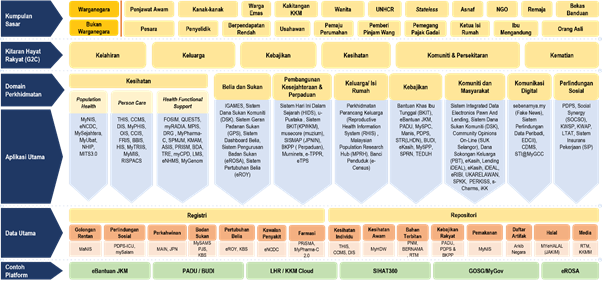
The Social Sector Digitalization Ecosystem (Masyarakat) showcases digital services aimed at people’s well-being and social development. The ecosystem highlights platforms and systems related to healthcare (MySejahtera, EMR), social assistance (eBantuan JKM), and community engagement. WoG services enable a more holistic approach to social services, allowing agencies to share data and coordinate support for people across different needs and life events. This can lead to more effective and people-centered service delivery.
Social Sector 2 (Talent)
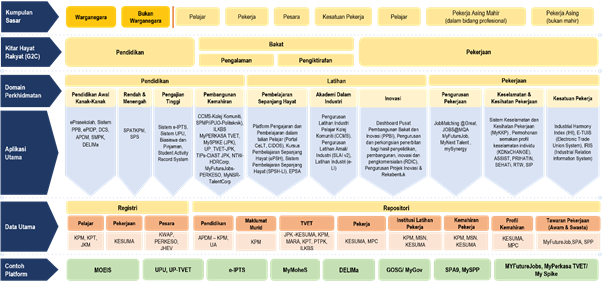
The Social Sector Digitalization Ecosystem (Talent), involves talent management, education, and employment. This ecosystem explains the digital platform for learning (DELIMa), skills development, and job matching (MyFutureJobs). WoG services facilitate better coordination between educational institutions, training providers, and employers, ensuring a more aligned and efficient talent ecosystem. This can improve workforce readiness and career development opportunities.
Economic Sector
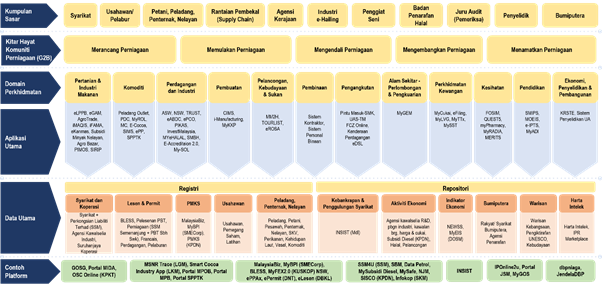
The Economic Sector Digitization Ecosystem details the various services provided by government agencies to the business community. The use of digital platforms (e.g., MalaysiaBiz, EzBIZ) and data repositories to support business activities. WoG services are essential to create a seamless customer experience scenario for businesses, enabling them to interact with different agencies through integrated and non-discrete systems. Direct benefits include greater efficiency in business registration, permit applications and other regulatory interactions.
Infrastructure Sector
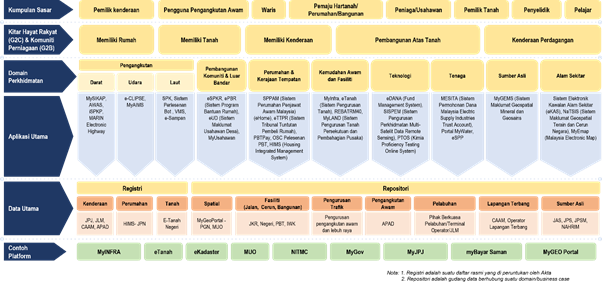
The Infrastructure Sector Digitization Ecosystem focuses on services by government agencies that provide physical development services to improve the standard of living and well-being of the people. WoG services are essential for integrating infrastructure planning and management across various levels of government and agencies, leading to more efficient development and service delivery.
Security Sector
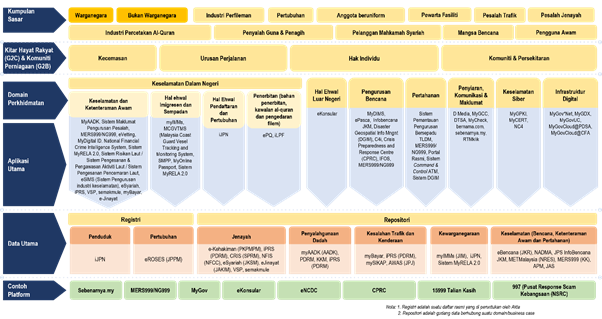
The Security Sector Digitalization Ecosystem focuses on digital systems for law enforcement (e-Justice), immigration (MyIMMs) and disaster management. WoG services are essential for effective information sharing and coordination between security agencies, enhancing public safety and national security. Three initiatives have been identified under the security sector, namely Pre, During and Post Disaster Management Preparedness, Enhancing Integrated Border Security and Maintaining Public Safety and Order.
Public Administration Sector
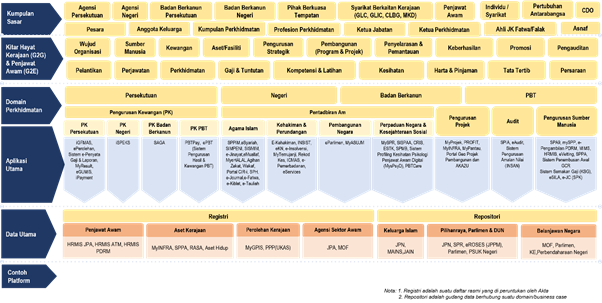
The Public Administration Sector Digitization Ecosystem focuses on the digitization of government internal operations and administrative functions. This ecosystem generally refers to services provided by government ministries and departments as well as services provided by other entities under the control of a particular ministry/department to target groups. The forms of services provided involve services provided by the government to other government organizations ( government to government, G2G) and government services to civil servants ( government to employee, G2E).
Application Summary
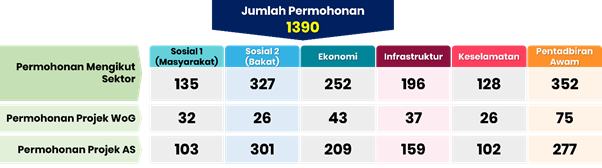
Applications for the Government Digital Initiative Project for evaluation by the Sector Digital Team have been accepted since 15 May 2025. As of 30 December 2025, a total of 1,390 applications have been received. Project proposals are evaluated based on two project categories, namely Whole-of-Government (WoG) Projects and Agency Specific (AS) Projects.